Karma Automotive, the Chinese-owned carmaker once known as Fisker Automotive, has revealed the Revero, a rebooted version of the Fisker Karma, which will cost more than the $115,000 sticker price on the original when deliveries begin in 2017. The car will be able to go about 50 miles (80 kilometers) in pure electric drive before a gasoline engine kicks in and it also has a 200 watt solar panel on the roof that can charge the battery.
Karma’s plan is to sell an exclusive sports sedan to people who currently buy the Tesla Model S and other expensive sporty cars. Under Wanxiang Group Corp. and its chairman Lu Guanqiu, Karma is one of several Chinese-backed plug-in car companies that are targeting the U.S. market with electric cars that will take on Tesla Motors Inc.
Karma is among the first to use solar panels to charge a production car’s high-voltage battery that powers the motor. The predecessor company’s original car, called the Fisker Karma, used a solar panel to charge the 12-volt battery that powers lights and other accessories and Toyota Motor Corp. has used solar power in the Prius to run the ventilation system. Toyota’s new Prius Prime plug-in, going on sale this year, will have an optional solar panel to charge the battery for buyers in Europe.
Karma has been working to get back to car production since its predecessor company, Fisker, defaulted on a U.S. government loan and went bankrupt in 2013. Wanxiang, an auto parts maker, bought its assets out of bankruptcy the following year. The company has filed documents seeking to open a $375 million factory in Hangzhou, China.
As Karma rolls out its electric-drive technology, it wants to add smaller plug-in hybrids and fully electric cars to its lineup, Taylor said.
Similar to Tesla’s strategy with low-volume sellers like the early Roadster and Model S, Karma wants to use the Revero to start building its capabilities and intellectual property so the company can eventually build cars in higher volume, Taylor said.
The predecessor company sold 2,000 cars, Taylor said. Those owners will get the first chance to reserve and buy the new model this week, he said. Costa Mesa, California-based Karma will make about 900 Reveros in the first year and boost production later, Taylor said.
As the EV technology arms race gathers pace, the second generation BMW i8 is rumoured to boost power output from it's current 350 hp to a more Tesla like 750 hp.
Automobile reports that the next-generation i8 will ditch the current i8’s three-cylinder, range-extending internal combustion engine in favor of going all-electric with three high-revving (25,000rpm) electric motors producing a total of 750 hp and more potent batteries capable of delivering a 500 kilometre range. Also part of the package are four-wheel drive, four-wheel steering, torque vectoring, and an active suspension system that scans the road ahead.
While the front axle mounted electric motor, mated to a 2 speed GKN transmission, in the current i8 tops out at 11,400 rpm, more than doubling motor speed to 25,000 rpm (Tesla motors runs to 18,000 rpm) will allow a single speed gearbox ratio around 10:1 which will facilitate acceleration in the 3 second region 0-100 km/h while also allowing the next gen i8 to reach terminal velocity on Autobahnen.
The rumoured three electric motor powertrain would see BMW only catching up to the recently launched Acura NSX. The Honda has a three electric motor torque vectoring systems with dual motors up front and combined ICE/eMotor at the rear.
Back in 2012 Mercedes demonstrated the full potential of all-wheel-drive torque vectoring with their 740 hp Mercedes SLS E-Cell. By the time the next gen i8 launches around 2022-2023, a full decade after the SLS E-Cell, we can only hope BMW's next generation EV sports car at least meets if not exceeds that benchmark.
PSA Group unveiled their electrification strategy plans at the “Innovation Day” event. PSA Group is consolidating the development of its new electrification strategy on two global modular platforms, which will allow it to offer a wide range of internal combustion, electric and plug-in hybrid petrol models as from 2019. Both platforms will be compatible with the manufacturing resources put in place as part of the Plant of the Future programme.
The Common Modular Platform (CMP), which was developed in partnership with DFM (Dongfeng Motors), is dedicated to compact city cars, core sedans and compact SUVs. The all-electric e-CMP format co-financed by PSA Group and DFM will allow the two parties to offer a new generation of spacious, multi-purpose electric vehicles with a driving range of up to 450 km and ultra-fast charging solutions providing up to 12 km of driving per minute of charging. Four electric models will be introduced by 2021, the first of which will reach the market in 2019.
The Efficient Modular Platform (EMP2), which is dedicated to compact and premium models, was launched first in 2013 with the new Citroën C4 Picasso and Peugeot 308 and then in 2014 in China. From 2019 onwards, its innovative design will enable the deployment of the first plug-in hybrid petrol models equipped with the best of hybrid technology:
SUVs and CUVs with high-performance electric four-wheel drive
60 km driving range in all-electric mode
a large interior that does not compromise on passenger comfort or boot space
leading-edge fuel efficiency in urban driving conditions (40% efficiency gains versus internal combustion models)
To facilitate use, the plug-in hybrid models will come with a four-hour charging system as well as an optional feature for recharging the battery more quickly, in less than two hours. Seven plug-in hybrid vehicles will be gradually introduced between 2019 and 2021.
On Innovation Day, Gilles Le Borgne said: "These next-generation hybrid and electric technologies will complement our range of internal combustion engines, thereby enabling PSA Group to offer its customers a diversified line-up of technologies that meet all of their mobility needs. This innovative strategy clearly demonstrates the Group's commitment to global, sustainable solutions that will allow us to take on the energy transition challenge."
Toyota's hybrid vehicles have saved their owners 25 billion litres of petrol - enough fuel, theoretically, for each of their cars to travel around the Earth... and then some.
The calculation was revealed by the world's leading carmaker when it announced it has sold more than nine million Toyota and Lexus hybrid vehicles around the world, including more than 85,800 delivered in Australia.
The latest milestone, achieved in April, comes as Toyota Australia prepares to introduce its newest hybrid, Corolla, early in the second half of this year.
Toyota's parent company in Japan has revealed that the total fuel saving from its nine million hybrids represents an average of more than 2,770 litres per vehicle compared with driving petrol-only cars of similar size.
The saving would provide enough fuel for each of those vehicles to travel at least 52,400km, or 1.3 times around the equator, based on a nominal average consumption of 5.3 litres per 100km. Three-quarters of the nine million hybrids use less than this amount of fuel.
Instead of doing that, of course, Toyota's hybrid owners have pocketed billions of dollars in savings.
Toyota has also estimated its hybrid vehicles have resulted in approximately 67 million fewer tonnes of CO2 emissions than would have been emitted by petrol-powered vehicles of similar size and driving performance^.
Toyota Australia's executive director sales and marketing Tony Cramb said the extent to which hybrid vehicles had found homes in driveways around the world confirmed them as a mainstream option for motorists.
"Toyota's hybrid vehicles are renowned for their performance, reliability, durability and exceptionally low running costs as well as their contribution to the environment and to saving precious fossil fuels," Mr Cramb said.
"In Australia, we are looking forward to bringing Toyota's full hybrid technology to the country's best-selling car, Corolla - a move that will further broaden the market appeal of both," he said.
Corolla hybrid hatch will be introduced as a well-specified single grade, expanding the local company's Hybrid Synergy Drive offerings to a fifth model.
It will join Camry, which is the best-selling hybrid vehicle in Australia with 37,879 deliveries - almost double the Prius tally of 19,682 cars - followed by Prius c (7,432) and Prius v (3,430).
Globally, Toyota's total is led by the world's best-selling hybrid, Prius, with 3.7 million sales since its debut in Japan in December 1997. Prius c has reached 1.25 million sales, Prius v 634,000 and Camry hybrid 574,000.
While it took 10 years for Toyota to achieve one million global hybrid sales, it has sold eight million in the past nine years and has averaged more than one million hybrid sales a year since 2009.
The company's hybrid vehicles are sold in more than 90 markets.
Toyota has positioned hybrid advances as core environmental technologies for the 21st century. Using these technologies, Toyota is also working on improving non-hybrid cars.
The Toyota Prius, the world's first mass-produced hybrid vehicle, went on sale in Japan in 1997. 18 years later with sales surpassing 8 million vehicles, we're starting to get a clear picture of how durable vehicles powered by electric powertrains are.
The humble Prius has proved so durable, with regular news of taxi operators surpassing 1 million km (the record stands at 1.5M km), there is even a thread on the priuschat website designated for Prius owners who have passed 299,999 miles (480,000 km).
Not only are most Prius achieving these distances on the original battery pack (dispelling that urban myth) but in many cases they are also still on the original factory fitted set of brake pads!! With a Prius able to use brake regeneration down to 10 km/h, industry standard hydro-mechanical friction brakes move from being a system made up of consumable parts to a durable system that lasts the life of the vehicle.
Typical brake pad life expectancy on an ICE car is between 50-100,000 km with brake rotors needing replacement every 100-200,000 km so the increase in Prius brake life is in the region of 10x.
If the relatively low powered 50 kw electric motor / generator in the Prius has made friction brakes 90% redundant, then vehicles like the BMW i3 with a much more powerful electric motor (125 kw) and aggressive speed variable brake regeneration capable of bringing the car to a complete stop, make friction brakes entirely a legacy system whose only function is to provide very low duty-cycle safety functions such as Anti-Lock Brakes (ABS) and Electronic Stability Control (ESC).
Taxi operators running fleets of Nissan Leaf are also reporting high mileage on original brake pads and no doubt given enough time will also pass 500,000 km without a pad &/or rotor change. Leaf owners have the added benefit of not having an ICE to service (Prius ICE's reportedly consume excessive oil above 500,000 km) and with typical electric motor life measured in the 20-40,000 hour range, electric only powertrains could last in excess of 2 million kilometres of trouble free motoring, compared to a typical ICE car life expectancy of 320,000 km (200,000 miles).
The more that brake regeneration becomes an auto industry standard, the more inevitable the elimination of the dead weight and costs associated with legacy friction brake systems seems. In order to allow electromagnetic braking to functionally replace all mandatory safety systems like ESC, each wheel requires an electric motor to drive / brake each wheel independently.
Technologies that we take for granted these days — like stability control and anti-lock brakes — paved the way for computer-controlled cars, and these long-established safety technologies are mandated by NHTSA etc. Automakers today agreed to make automatic emergency braking (AEB) standard on most U.S. cars by 2022. Automatic braking, like lane keeping and dynamic cruise control, is considered a precursor to fully autonomous vehicles.
The converging vectors of vehicle electrification and self-driving cars will accelerate the need to consolidate all vehicle dynamic controls for propulsion and braking within a single system, i.e. Software Eats the Automotive Powertrain.
Stay tuned, we'll delve into electromagnetic braking in a future post.
Porsche aims to offer hybrid versions of all its models in the foreseeable future, Porsche Chief Executive Oliver Blume told a German newspaper.
A plug-in hybrid of the 911 model with a range of 50 kilometers (31.1 miles) will hit the market in 2018 already, Westfalen-Blatt quoted Blume as saying in a summary of an interview to be published on Monday.
Porsche said last month it would spend about 1 billion euros ($1.08 billion) on production facilities at its biggest plant to make its first ever all-electric sports car, reflecting parent VW's growing commitment to increase its electric offerings as it struggles to overcome an emissions scandal.
Porsche plans to bring the Mission E model, with more than 600 horsepower and a range of over 500 km, to market by the end of the decade.
At the same time, CEO Blume said he did not believe driverless cars were in Porsche's future, saying "an iPhone belongs in your pocket, not on the road", and that Porsche did not need to team up with any big technology companies.
"Partnerships are generally not a bad idea if one's own competencies are insufficient. But we are on the one hand part of a strong company and on the other hand have no plans to lead the charge in this area. We'll leave that to others," he said.
Following the new Audi R18's world premiere at the Audi Training Center Munich last month, the now battery powered R18 Audi Le Mans Prototype LMP was recently caught testing at Sebring International raceway in Florida USA.
The 2016 R18 retains the 4.0L TDI engine but moves up into the 6MJ class; the 2015 R18 raced in the 4MJ class, up from 2MJ the season before.
The new Audi R18 made its world premiere on the occasion of the Audi Sport Finale at the Audi Training Center Munich on Saturday. Audi Sport has fundamentally re-designed the Audi R18 for the 2016 season.
The LMP1 race car that will compete in the Le Mans 24 Hours and in the FIA World Endurance Championship (WEC) in 2016 features innovative aerodynamics; represents the next stage in lightweight design; and has a modified hybrid system with lithium-ion batteries for energy storage, plus an efficiency-optimized TDI engine. The 2015 R18 e-tron quattro racer featured an encapsulated WHP flywheel energy storage system that sat in the cockpit alongside the driver.
The 2016 R18 retains the 4.0L TDI engine. The 2016 R18 will race in the 6MJ class; the 2015 R18 raced in the 4MJ class, up from 2MJ the season before.
Further technical details will come later.
In the 2016 FIA World Endurance Championship (WEC) that will start at Silverstone (Great Britain) on April 17, Audi Sport Team Joest will be fielding two new Audi R18 cars. In the interest of cost efficiency, Audi and its Volkswagen Group sister brand Porsche, have both agreed to each compete in the Le Mans 24 Hours, the WEC season’s pinnacle event, with only two instead of the most recent three cars.
Toyota has advanced the pioneering status of its iconic Prius hybrid car by revealing a fourth-generation model that debuts a futuristic design, fun-to-drive dynamics and an impressive gain to fuel economy.
A new, stiffer platform - the first developed under Toyota's New Generation Architecture (TNGA) program - is at the heart of revolutionary improvements that support a more responsive driving experience and enhanced occupant protection.
In keeping with the Prius name which means "front runner", the new-generation car continues to build on its eco-car DNA with technical breakthroughs including the world's most thermally efficient petrol engine at 40 per cent.
This remarkable achievement, which provides a significant improvement in fuel efficiency, is due to the adoption of new or substantially revised components that were effectively blueprinted to the finest limits and tolerances.
Engineers also succeeded with a comprehensive program of size and weight reductions for major hybrid components while maintaining overall performance, confirming Prius as the global pacesetter in hybrid technology.
The cutting-edge development program for the new Prius also focused on a more responsive drive experience achieved through a lower centre of gravity, newly developed double-wishbone rear suspension and a more rigid body.
The all-new rear double wishbone suspension produces a better connection to the road, providing greater control and feedback in all driving conditions. A more rigid body helps improve responsiveness while cornering without sacrificing ride quality or occupant comfort.
Unveiled at a special event in Las Vegas ahead of its international motor-show debut in Frankfurt next week and an Australian launch early in 2016, the new Prius exterior has completely evolved.
It features a dramatic low-slung silhouette that is approximately 60mm longer, 15mm wider and 20mm lower, delivering a much more planted on-road presence with a lower centre of gravity and more space for occupants and their luggage.
Designers embraced Toyota's concept of "Iconic Human-tech" to blend flowing curves with aggressive cut edges, producing ground-breaking advances and aerodynamic innovations that display a sculptural quality.
The bonnet is lower and the most distinctive Prius cue - the roof peak - has been moved forward, creating an athletic shape inspired by a runner in the starting blocks.
The sporty theme for the new Prius is accentuated by the Toyota emblem in the front grille sitting at exactly the same height as on Toyota's 86 sports car. It is flanked by new headlamps that minimise frontal area while providing a striking light display that helps define the vehicle's distinctive character.
Bold character lines run along the side from the front fenders - one just above the sill that sweeps up towards the rear fender, while the upper crease morphs into the rear spoiler, which has been lowered.
Striking rear combination lamps express the distinctive lines of the Prius from the rear spoiler to the trailing edges of the sides.
Exterior colours include an "Emotional Red", which utilises a newly developed treatment process to achieve a deep and vibrant lustre.
The new Prius interior also embraces Toyota's concept of "Iconic Human-tech" with a strong presence that adopts advanced technology complemented by features that are functional, fun and have high visual impact.
Owners will be rewarded with the comfort and utility offered by a wrap-around cockpit, form-hugging seat design, easy-to-use controls and increased visibility.
A sense of quality and space is created through the wide instrument panel with its layered construction that clearly defines the "display zone", separating it from the "control zone" which is now closer to the driver.
The next-generation Prius will make available a package of electronic safety assistance aids including a pre-collision system, lane departure alert, automatic high beam and active cruise control.
Prius global chief engineer Kouji Toyoshima said nearly every aspect of Prius has been improved to create a car that will appeal to the senses in its own right, above its well-recognised green credentials.
"There is much more to the new Prius than a green image. From the bold design to the quality interior, the Prius has never had such a powerful presence," Mr Toyoshima said.
Prius - with more than 3.5 million sold globally - has popularised hybrid technology to the point it has now become mainstream. The fourth-generation Prius is ground- breaking in its own right.
"We have developed an even-better Prius by expanding its environmentally sensitive DNA while ramping up its desirability with an emotional design and an engaging drive. It offers a new perspective of what a hybrid can be."
Toyota New Generation Architecture is an innovative development program designed to enhance product appeal through improved core vehicle performance and new technologies.
It promotes the strategic sharing of powertrain components and vehicle platforms with the goal of improving resource efficiency by better than 20 per cent.
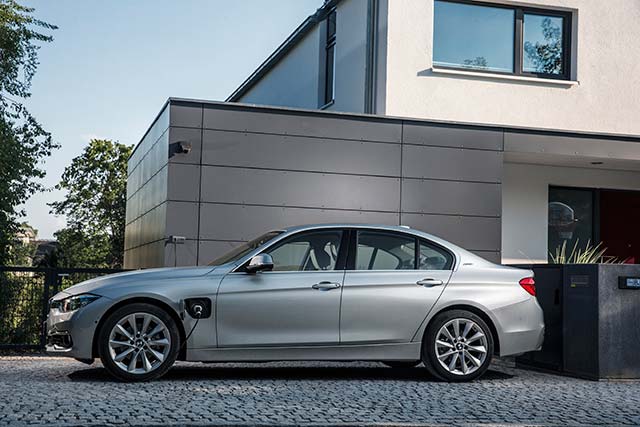
The innovative BMW eDrive technology in the new BMW 225xe and new BMW 330e once again underlines BMW’s leading role in the premium segment when it comes to powertrain electrification.
BMW eDrive technology includes a number of cutting-edge plug-in hybrid components and makes a significant contribution to reducing fuel consumption and emissions. BMW eDrive is one of the most cutting-edge elements of the groundbreaking BMW EfficientDynamics suite of technology.
Locally emission-free driving
BMW eDrive is the new drive system technology used in all the electrically powered vehicles from BMW i and the plug-in hybrid models from BMW. As well as outstanding efficiency and seamless everyday practicality, BMW eDrive also delivers the highest standards in driving dynamics and quality, in keeping with BMW tradition. Alongside BMW TwinPower Turbo technology for combustion engines, intelligent lightweight design and optimised aerodynamics, BMW eDrive technology is therefore one of the most important elements in the EfficientDynamics strategy designed to increase power and further reduce fuel consumption and CO2 emissions. In addition, BMW eDrive offers the option of driving on electric power alone and therefore with zero local emissions – yet at the same time reveals the ability to cover long distances when the two drive systems team up.
Moreover, BMW eDrive technology ensures extremely dynamic acceleration off the line thanks to the instantaneous responses of the electric motor, which generates its remarkable torque from the word go. Plus, the eBoost function, which pools the torque of both drive systems under acceleration, serves up BMW’s signature driving pleasure, whatever the conditions.
Designed for different vehicle concepts
The most important components of BMW eDrive technology are the synchronous electric motor (including the power electronics developed by BMW), the lithium-ion high-voltage battery and intelligent energy management. The latter ensures the electric motor and combustion engine in plug-in hybrid models work together as effectively as possible according to the situation at hand.
Developed initially for the all-electric BMW i3 and BMW i8 plug-in hybrid sports car – which duly led the way in electric mobility in the premium sector – the modular structure of BMW eDrive technology sets it up perfectly for use in various vehicle concepts and segments. BMW uses its plentiful technical experience and customer feedback in the development of the latest BMW eDrive models. The fine-tuning of vehicle-specific elements, such as the battery cells, cooling management, power electronics and operating strategy, has involved the transfer of knowledge from the BMW i3 and BMW i8 to the development of new BMW eDrive models. Here, all components are adapted precisely to the vehicle at hand and optimised in terms of performance, efficiency, safety and durability. Moreover, BMW eDrive technology enables the electrified xDrive concept first featured in the BMW i8 to be executed with great efficiency.
BMW eDrive: familiar BMW character, flexible usage options
BMW eDrive technology essentially spans the electric motor, the lithium-ion high-voltage battery and the power electronics. Based on a shared eBoost strategy, all BMW plug-in hybrid models offer supreme power delivery by bringing together their two drive systems, and elevate the responsiveness of BMW TwinPower Turbo technology to another new level. BMW eDrive makes all-electric driving in urban areas and over cross-country routes a marketable proposition. An important element of the operating strategy is the need-oriented use of externally sourced and recuperated electric energy to maximise the vehicle’s efficiency. The components of the BMW eDrive architecture are tailored to each particular vehicle concept and can be combined with four- and three-cylinder petrol engines as well as with classical rear-wheel drive, BMW xDrive or electrified all-wheel drive.
The eDrive components developed as part of the BMW i projects will soon be integrated into other model ranges from the core brands. This scalable architecture also provides the platform required to offer plug-in hybrid vehicles at attractive prices on a par with those of conventionally powered variants of similar output. This means customers who opt for this advanced drive concept encounter not only the environmental benefits of electric mobility, but also economic plus-points.
Plug-in hybrid: energy management at its most intelligent
In plug-in hybrid vehicles, intelligent energy management ensures the combustion engine and electric motor work together to maximum effect in all driving situations. Their operating strategy is based on the vehicle starting up on electric power only. BMW’s plug-in hybrid vehicles prioritise electric mode at low and moderate speeds, which allows them to exploit the benefits of the locally emission-free electric drive system. Under greater acceleration and at higher speeds, however, the combustion engine also joins the action. The boost function pools the torque of both drive systems to maximise the car’s dynamic performance and lend it remarkable poise and assurance. BMW eDrive ensures that the combustion engine runs efficiently (electric assist) at higher speeds as well. This allows a reduction in fuel consumption on brisk cross-country or motorway runs, for example. And when the route guidance function of the car’s navigation system is activated, the proactive function initiates an anticipatory operating strategy which optimises efficiency and maximises the electric driving experience.
Like the BMW i8, the BMW X5 xDrive40e, BMW 330e and BMW 740e can all – at the touch of a button in MAX eDRIVE mode – run on purely electric power up to 120 km/h (75 mph), the BMW 225xe up to 125 km/h (78 mph). Here, the combustion engine only comes into play when the accelerator’s kickdown threshold is passed. In SAVE BATTERY mode the battery’s charge can be maintained to enable electric driving later on in the journey. If the charge level drops below 50 per cent, the battery is replenished. If the selector lever is moved into the S gate, the combustion engine starts up regardless of the mode engaged, ensuring sustained availability of the combined maximum output of the two drive systems. In addition, the battery’s charge is raised to 80 per cent.
With the addition of the BMW eDrive functions, the ECO PRO, COMFORT and SPORT driving experience modes are now even more clearly defined than on conventional vehicles.
Fast and convenient battery charging
The high-voltage batteries of the new BMW plug-in hybrid models can be charged extremely easily, conveniently and quickly – both at home and while on the move – using BMW 360° ELECTRIC solutions. The battery can be powered up again from a domestic socket using the standard charging cable supplied or from a BMW i Wallbox (charging power: 3.7 kW). When it comes to topping up the battery during a journey, the BMW i mobility service, ChargeNow, gives customers access to the world’s largest public charging network of over 30,000 charging points run by partners in 22 countries.
Higher performance, lower fuel consumption
The new BMW plug-in hybrid models with eDrive technology – such as the new BMW X5 xDrive40e, the BMW 225xe and BMW 330e currently making their debuts, and the BMW 740e due for launch in the near future – are once again setting the benchmark in the various corners of the premium segment when it comes to reducing fuel consumption, and will also meet the stipulations of international legislation in the future regarding CO2 emissions. Moreover, their all-electric and therefore locally emission-free driving mode will also allow them to drive into city centre zones where entry is regulated. And yet the BMW plug-in hybrid models also deliver the hallmark BMW attributes of dynamic excellence, sporting ability and driving pleasure while offering the best performance in their respective segments.
Toyota has confirmed that it will switch to turbocharged power for the 2016 World Endurance Championship season.
Toyota's technical director Pascal Vasselon confirmed the decision, stating: "I don't think we will retain the normally aspirated V8 configuration. It will be a turbo engine. It's a little too early to release any specific information."
The engine is highly likely to be a small-capacity turbo engine and will target the 8MJ category, something which has reaped dividends for Porsche so far in 2015.
The new technical package will also introduce battery storage, which will work with the same twin-axle retrieval system the team currently uses.
The 2016 car will be known as the Toyota TS 050 and is scheduled to test just after Christmas.
2015 development halted
Toyota is set to undergo a painful remainder of the 2015 season as it essentially calls time on significant development of the TS 040.
"Clearly, it wouldn't be very efficient for us to invest in developing this year's car," said Vasselon. "We could tweak a few things on it, but we do not think that these would make a significant difference. So, yes, we are fully focused on next year's car.
"The gap will vary, obviously, depending on the characteristics of the circuits. However, we expect a difficult end to the season, a bit like Audi experienced last year".
Third Toyota at Le Mans still possible
Toyota could run a third car at Le Mans in 2016, but it would only happen if it would not impinge on the initial development of the TS 050 program.
The decision would also depend on budget resources, which are set to be increased for 2016 onwards.
"We couldn't enter a third car previously, but now the question will arise," said Vasselon. "Now, I cannot give you that answer because we do not yet know the full budget we'll have.
"We know it will be increased, but we know that it will never be at the same level as Audi and Porsche, that's a sure thing. However, it will be increased.
"We will need to re-assess whether running a third car is acceptable without threatening our development programme."
Nissan today announced that it will delay its return to the LM P1 class of the FIA World Endurance Championship and instead focus on technical issues that challenged its race team during the Le Mans 24 Hours.
Issues with the energy recovery system (ERS) meant that Nissan had to run at the Le Mans 24 Hours on engine power alone. The bespoke Nissan V6 3-litre twin turbo petrol engine and the unique aerodynamics of the GT-R LM NISMO proved to be the main strengths of the car at Le Mans but without a fully working ERS, many of the car's other systems were compromised.
"We know people will be disappointed but be assured that nobody is more disappointed than us," said Shoichi Miyatani, President of NISMO. "We are racers and we want to compete but we also want to be competitive. That is why we have chosen to continue our test programme and prepare the GT-R LM NISMO for the strong competition we face in the World Endurance Championship. When you innovate you don't give up at the first hurdle. We are committed to overcoming this challenge."
"We've said it before but innovation hurts," said Darren Cox, Global Head of Brand, Marketing & Sales, NISMO. "We've built an LM P1 car that is very different to other racing cars as we continue to drive motorsport innovation. The beauty of this programme is that people have got behind us and they are willing us to succeed. This has shown us once again that people want something different in motorsport and that gives us increased motivation to make our LM P1 car competitive."
Nissan will continue the test programme for the GT-R LM NISMO, predominantly but not exclusively in the United States. Media updates will be issued as the car's development continues. A decision on the date for Nissan's return to the World Endurance Championship will be made in due course, depending on the progress of the test programme.
The GT-R LM Nismo features a unique front-engine layout, providing some aerodynamic advantages by allowing the rear bodywork to form a highly aero efficient tear-drop shape. The project was originally conceived as an all-wheel-drive, with approximately half of the GT-R LM Nismo's claimed 1,250 horsepower to be delivered by a dual flywheel based drive system to the rear axle.
The mostly mechanical transmission included a long tailshaft to the rear of the car coupled to a high mounted differential and a convoluted drivetrain consisting of a pair of high mounted outrigger gearboxes that step down to a short set of driveshafts that drive the rear wheels from the base of these gearboxes.
The entire exercise is done to prevent sticking driveshafts through the tunnels and reducing aero efficiency although it's clear that such a system is trading differential/gearbox energy efficiency losses for minor aero efficiency gains.
It's not certain this system even made it past the 3D rendering stage. As can be seen from the pictures below no rear wheel drive system was fitted to any of the Nismo cars entered at LeMans so it's unclear if the flywheel hybrid system was even on-board during the event.
Images of Audi’s all-new Q6 have been leaked online months before its reveal at this September’s Frankfurt motor show.
The renderings, said to be official, first appeared late last night on German website Auto Motor und Sport and are thought to be final drawings of the concept, codenamed C-BEV, that will preview the Q6 e-tron.
On sale some time in 2018, it’s already been confirmed by senior Audi board member Dr Ulrich Hackenberg, the Q6 will ride on the Q7’s MLB evo platform and that the objective for engineers was that it must cover 500km between charges.
Back then, Hackenberg said the Q6 must be “a technical light tower” and incorporate state-of-the-art technology.
According to reports from sources close to Audi the C-BEV will lift its motor and the 92kWh batteries from the latest R8 e-tron supercar, but instead of two rear-mounted motors, the Q6 will benefit from an additional third motor encased within its gearbox.
With the third motor the production Q6 e-tron will generate even more power, and the concept is expected to have a combined total of 375kW/700Nm. Factor in widespread use of lightweight composites like carbon-fibre and the new Tesla rival is expected to hit 100km/h in less than four seconds and top out at a limited 250km/h.
As well as a state-of-the-art powertrain the next-generation Q6 e-tron is expected to have a fully autonomous driving feature to allow occupants to enjoy the big Audi’s next-generation infotainment system.
Audi is expected to reveal more of what will star on the 2018 Q6 e-tron production car at the Frankfurt show in September.
In a new video posted by Toyota Austria, a taxi driver claims to have covered 1 million kilometers (more than 600,000 miles) in his 2007 Toyota Prius - all with the original battery pack and most likely the original factory fitted brake pads.
What's more, the driver, Manfred Dvorak, claims the Prius has never broken down. "For me, the Prius is the ultimate sidekick," he says.
The Mini Superleggera concept is getting closer to production, as new details on its powertrain have emerged.
Production Mini Superleggera concept could use a plug-in hybrid powertrain similar to that of the i8 sports car according to Autocar sources.
That arrangement will see a petrol engine mounted at the front, with an electric motor mounted at the rear axle, along the same lines as BMW's all-wheel-drive range-extender electric car powertrain. It will be based on the same UKL platform which already underpins the rest of the Mini range as well as the BMW 2-Series Active Tourer.
BMW board member with the responsibility for Mini Peter Schwarzenbauer said that Mini was still exploring the potential of plug-in hybrid and EV technology. "every new Mini model will come with a hybrid option, Plug-in hybrids are economically a little easier," he said "Full electric is extremely challenging. Finding a small space to put all the batteries in is extremely challenging. We are working on both possibilities."
Schwarzenbauer said "There is no decision at the moment, but we have a lot of people here that are fighting hard for it. One of our superheroes will be an open car. I'm not saying the Superleggera will come, but you will have an open car."
BMW have embarked on a radical engineering overhaul which could see all future models from the 3-series upwards, including the Rolls-Royce range, become all-wheel-drive range-extender electric cars.
The days of spot-welded steel bodies and engines that drive the rear wheels via conventional transmissions are set to be consigned to history. BMW’s plan to make all of its cars from the 3-series upwards plug-in hybrids has forced the company’s engineers to rethink the make-up of its cars from first principles.
The first move is to radically reduce the weight of the bodyshell to help offset the extra weight of battery pack. Work on BMW’s bodyshell of the future is already well advanced, and the first generation of the mixed-materials structure can be seen in the next-generation 7-series.
It is expected to take another generation of the 3-series, due in 2018, before BMW is ready to switch its mainstream car to this kind of carbonfibre-intensive construction. That’s partly because it will take some years to reduce the cost of this kind of construction.
The next phase in BMW's reengineering is a rethink of the powertrain. The final concept — demonstrated in Nov 2014 with a 500 kw AWD 5-series GT xDrive plug-in hybrid — is similar in basic principle to the series hybrid system that propels the Chevrolet Volt.
Where the Chevy Volt has an ICE powered generator/motor + a traction motor in a single front-wheel-drive transverse gearbox assembly, BMW will retain it's famous rear-wheel-drive bias by splitting that combination and putting the main traction motor on the rear axle while the front axle can still be driven by the ICE powered motor/generator. This also means that on-demand four-wheel drive will be available on all future BMWs.
As seen in the BMW i8, a large battery will occupy the centre tunnel and some of the space usually occupied by the fuel tank. The front-mounted engine acts as a generator in most driving situations, creating electricity to help drive the electric motors.
The front electric motor is key to the new powertrain
In normal use, the front electric motor drives the front wheels via a still-secret new type of transmission. At speeds above 80 km/h or so, the ICE ‘assists’ the electric motor by attaching itself to the new transmission via a mechanical planetary system to help drive the front wheels at motorway speeds in parallel mode much like a Chevy Volt or Mitsubishi Outlander PHEV. The combustion engine is expected to be driving the front wheels only 10 per cent of the time on a typical journey.
BMW won’t reveal the details of this new combined electric motor and transmission system, but we speculate that BMW, like Renault and Bugatti, may be considering a disc-shaped Axial Fluxelectric motor mounted within the gearbox housing.
The new transmission is unlikely to have more than three ratios and could be a mechanical planetary system. It is likely to be less expensive than today’s eight and nine-speed autos and dual-clutch transmissions.
Because the new-generation engine runs as a lean-burn generator for 90 per cent of the time and the twin electric motors provide significant torque, demands on the engine are much reduced. So it probably doesn’t need a turbocharger, the accompanying intercooler system or the Valvetronic system.
The emissions control system should also be less complex and expensive, all of which greatly reduces the cost of the unit. The engine is likely to be significantly lighter, too.
The battery pack can be larger. It will fit neatly in space freed up by the removal of the propshaft and the use of a smaller fuel tank. Braking assistance from electric motors means the mechanical brakes can be smaller, lighter and cheaper.
The multi-material bodyshell will be at least 100 kg lighter than that of today’s 3-series, partly offsetting the battery’s weight.
This new hybrid powertrain offers part-time and permanent all-wheel drive and can be scaled across all models. So although the new, simplified generator motors might come in different sizes and capacities — and the battery pack will come in different sizes — this powertrain can largely be shared between everything from a 3-series to an X5 to a Rolls-Royce Phantom. This will save BMW a huge amount of money in production and research and development costs.
BMW is rumoured to already be testing a four-seater with some of the above technology. Weighing less than 1,200 kg with a drag co-efficient of 0.18, the BMW prototype consumes only 0.4 liters per 100 kilometers or 706 miles per imperial gallon (588 miles per US gallon).
Porsche won the Le Mans 24-hour endurance sports-car race for the first time since 1998 with the first non-diesel win in a decade.
Porsche’s 2.0-litre V4 turbo Petrol A123 battery powered 919 Hybrid car took first and second places, while Audi’s R18 4.0-liter V6 Turbo Diesel flywheel powered e-tron hybrid came in third. Both carmakers are owned by German-based Volkswagen AG, the world’s second-biggest auto manufacturer.
The return of Porsche to Le Mans in 2014 after a 16-year hiatus and its subsequent victory Sunday underscore how Volkswagen is stoking in-house competition on and off the racetrack, even amid additional costs. Porsche and Audi each entered three vehicles in the fastest vehicle category, Le Mans Prototype 1, or LMP1.
“This is a very special day for us,” Matthias Mueller, Porsche’s chief executive officer, told reporters in Le Mans. “It was a great team effort.”
VW is pouring money into new vehicles, technology and factories as the company plans to surpass global industry leader Toyota Motor Corp. by 2018. Maintaining a technological edge is vital for VW’s upscale brands, which also include Bentley and Lamborghini, as they vie for affluent customers with the likes of BMW AG and Daimler AG’s Mercedes-Benz.
Research Budget
Audi and Porsche accounted for 66 percent of Volkswagen’s operating profit in the first quarter. Volkswagen, which has one of the largest research and development budgets of any publicly traded company, is investing 85.6 billion euros ($96.1 billion) through 2019 to add models and production capacity.
Rising costs to develop electric cars and new digital features such as piloted driving are weighing on Volkswagen’s efforts to improve profitability, including a program announced a year ago to increase earnings at its namesake passenger-car brand by 5 billion euros by 2017. The manufacturer has taken steps to rein in costs companywide by sharing more parts among a wider range of vehicles.
Porsche and Audi have denied reports in recent weeks that they plan to enter Formula One car racing, citing high costs and shrinking visitor numbers. Formula One “needs to solve its problems alone,” Rupert Stadler, Audi’s CEO, said last month.
Audi and Porsche say Le Mans provides a better opportunity to test new technology that can be used later in road cars, such as lightweight construction and high-performance hybrid electric systems.
Ford Motor Co., the second-biggest U.S. carmaker, said Friday it will return to Le Mans in 2016. Competing in the GT racing class, the Dearborn, Michigan-based company will commemorate the 50th anniversary of its 1966 sweep of the top three places at the race.




 Follow EV News on Twitter


